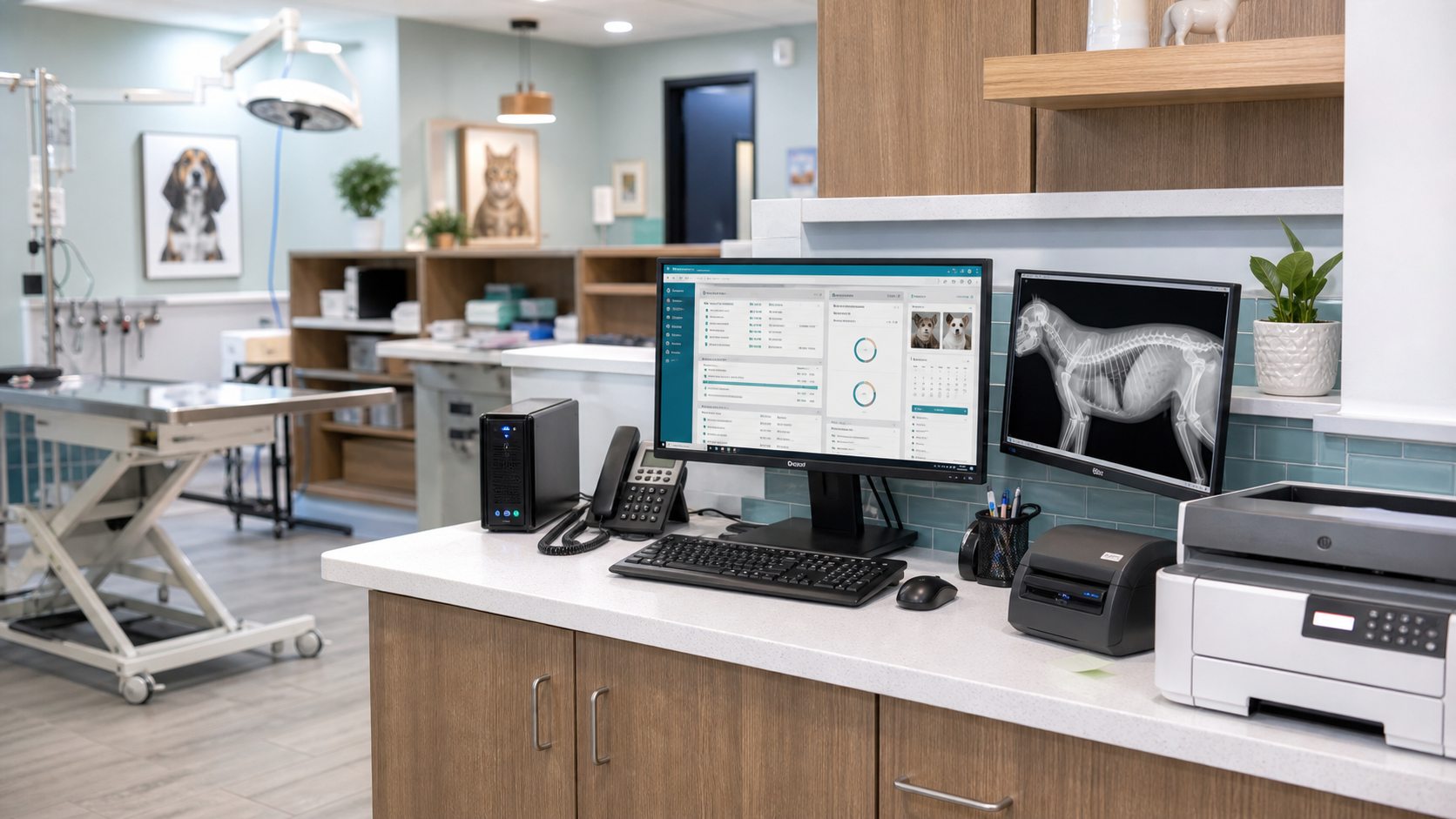
Veterinary Clinics

IT support for veterinary clinics where practice management, imaging, and client data all need to stay connected.

Treo helps veterinary clinics keep practice management systems, diagnostic imaging, and clinic infrastructure reliable while meeting PIPEDA and PIPA requirements for client data. When these systems are not well coordinated, staff waste time on workarounds and patient care feels the friction.

  • Shepherd and AviMark practice management support
  • Carestream imaging and digital radiography workflow support
  • PIPEDA and PIPA compliance for client and patient data
  • Safecom secure printing for clinic environments

The technology behind a veterinary clinic is more connected than most practice owners realize.

Practice information management systems handle scheduling, animal patient records, billing, and dispensing. Imaging systems capture and store diagnostic radiographs. Lab integrations, boarding management, and cloud tools add layers of connectivity. Compliance requirements under PIPEDA and PIPA add real obligations around how client information is stored, accessed, and protected.

When these systems are not well coordinated, the gaps show up as slow workflows, fragile integrations, compliance blind spots, and staff spending time on problems that should already be under control. Treo helps veterinary clinics close those gaps by supporting the specific platforms and compliance requirements the practice depends on.

What usually creates the friction

The problems rarely start as dramatic failures. They accumulate as the practice adds systems without enough coordination between them.

  • Practice management and imaging systems do not share data cleanly
  • Client data protection obligations under PIPEDA and PIPA are unclear or inconsistently met
  • Lab integrations, dispensing workflows, or boarding systems create connectivity gaps
  • Vendor support is fragmented and no one is coordinating between PIMS, imaging, phone, and ISP

What Treo handles in veterinary clinic environments

The scope depends on the practice, but this is the practical work that keeps clinic systems connected and client data properly protected.

Practice management system support

The practice information management system sits at the center of scheduling, animal patient records, billing, and dispensing. Treo has direct experience with both Shepherd and AviMark and helps keep these platforms reliable and connected to the rest of the clinic environment.

  • Scheduling, patient record, and billing reliability
  • PIMS updates, backup, and platform maintenance
  • Data flow between PIMS and imaging, lab, and other clinic systems
  • Multi-location or multi-PIMS environment support

Diagnostic imaging and clinical systems

Digital radiography and diagnostic imaging generate data that needs to move reliably between capture, storage, and clinical review. Treo supports Carestream and the broader imaging workflow that veterinary practices depend on for diagnostics.

  • Carestream imaging platform support
  • Digital radiography workflow and image management
  • Image storage, retrieval, and archival reliability
  • Integration between imaging and practice management systems

Client and patient data protection, compliance

Veterinary practices collect personal information about the human client (pet owner) alongside clinical records for the animal patient. That client data falls under PIPEDA federally and PIPA in Alberta. Compliance is not optional, and the obligations cover how data is stored, who can access it, and what happens if something goes wrong.

  • PIPEDA and PIPA compliance support for client records
  • Access controls, encryption, and secure printing via Safecom
  • Privacy breach response planning and documentation
  • Cyber insurance alignment and compliance documentation

Clinic network and infrastructure

Exam rooms, surgical suites, reception, and back-of-house areas all depend on a network that is reliable enough to support clinical workflows without interruption. Imaging, cloud PIMS, and connected devices add bandwidth and reliability demands.

  • Wired and wireless network design for exam rooms and surgical areas
  • Workstation, server, and peripheral support
  • Firewall, segmentation, and monitoring
  • Bandwidth reliability for imaging and cloud PIMS platforms

Vendor coordination

Veterinary practices deal with separate vendors for practice management, imaging, phones, lab integrations, and internet. When a problem crosses vendor boundaries, the clinic usually gets stuck in the middle.

  • Single point of coordination across PIMS, imaging, phone, and ISP vendors
  • Issue triage when problems span multiple systems or vendor boundaries
  • New system evaluation and integration planning
  • Reducing the overhead of managing multiple vendor relationships

Backup, recovery, and continuity

Patient records, imaging data, and billing history need to be recoverable. A practice with boarding animals or surgical cases in progress cannot afford extended downtime, and data loss creates both operational disruption and potential compliance exposure.

  • Backup coverage for PIMS and imaging data
  • Recovery testing and restoration verification
  • Continuity planning, including boarding and surgical cases in progress
  • Ransomware protection and incident response readiness

How veterinary clinic IT support works in practice

The value is not just a list of systems. It is how the support accounts for the compliance obligations and clinical workflow dependencies of a veterinary practice.

Assess

Understand the clinic's systems, compliance posture, and pain points.

Practice management, imaging, network infrastructure, backup coverage, and client data handling. The first step is a clear picture of what the practice depends on and where the gaps are.

Secure

Address client data protection and compliance gaps before they become exposures.

PIPEDA and PIPA obligations are not deferrable. Access controls, encryption, backup coverage, secure printing, and breach response planning get addressed early because compliance failures carry real consequences for the practice.

Connect

Make sure PIMS, imaging, and supporting systems work together cleanly.

Data should flow between Shepherd or AviMark, Carestream imaging, lab integrations, and cloud tools without manual workarounds. Integration work reduces the friction that slows clinical workflows and creates data handling risks.

Standardize

Reduce vendor confusion and establish clear support paths.

When every system has a different vendor and a different support process, problems take longer to resolve and the clinic absorbs the coordination overhead. Standardizing the support model means one point of contact for the technology environment.

Support

Provide ongoing support that reflects how a veterinary clinic actually operates.

Clinic schedules are demanding, patient care comes first, and technology problems need to be resolved without disrupting the day. Ongoing support covers the platforms, infrastructure, and compliance requirements the practice depends on.

Common questions about veterinary clinic IT support

These are the questions we hear most often from veterinary practices evaluating whether they need a different kind of IT support.

Do you support Shepherd and AviMark?

Yes. Treo has direct experience with both Shepherd and AviMark in veterinary clinic environments. Treo supports the infrastructure and integrations around these practice management systems, including day-to-day reliability, data flow with imaging and lab systems, and the backup coverage that keeps the platform protected.

Does PIPEDA/PIPA compliance apply to veterinary clinics?

Yes, and many practice owners do not realize the extent of their obligations. Veterinary clinics collect personal information about human clients (pet owners), and that data falls under PIPEDA and PIPA. Practices have real obligations around how client information is stored, accessed, and protected, including breach notification requirements.

What if we are considering switching PIMS or adding new clinical systems?

Treo can help evaluate compatibility, integration requirements, and infrastructure readiness before a purchase. The goal is to make sure a new system fits the clinic's environment and workflows before it creates disruption.

How does this connect to managed IT?

Many veterinary clinics also need broader IT support for Microsoft 365, security, user support, and general infrastructure. The veterinary-specific work often sits alongside a managed IT relationship where Treo handles both the clinical systems and the surrounding environment.

Need clearer support for the technology behind your practice?

A conversation can help clarify where practice management, imaging, compliance, or vendor coordination may be creating friction, and whether Treo is the right fit for your clinic.

Talk to an Expert