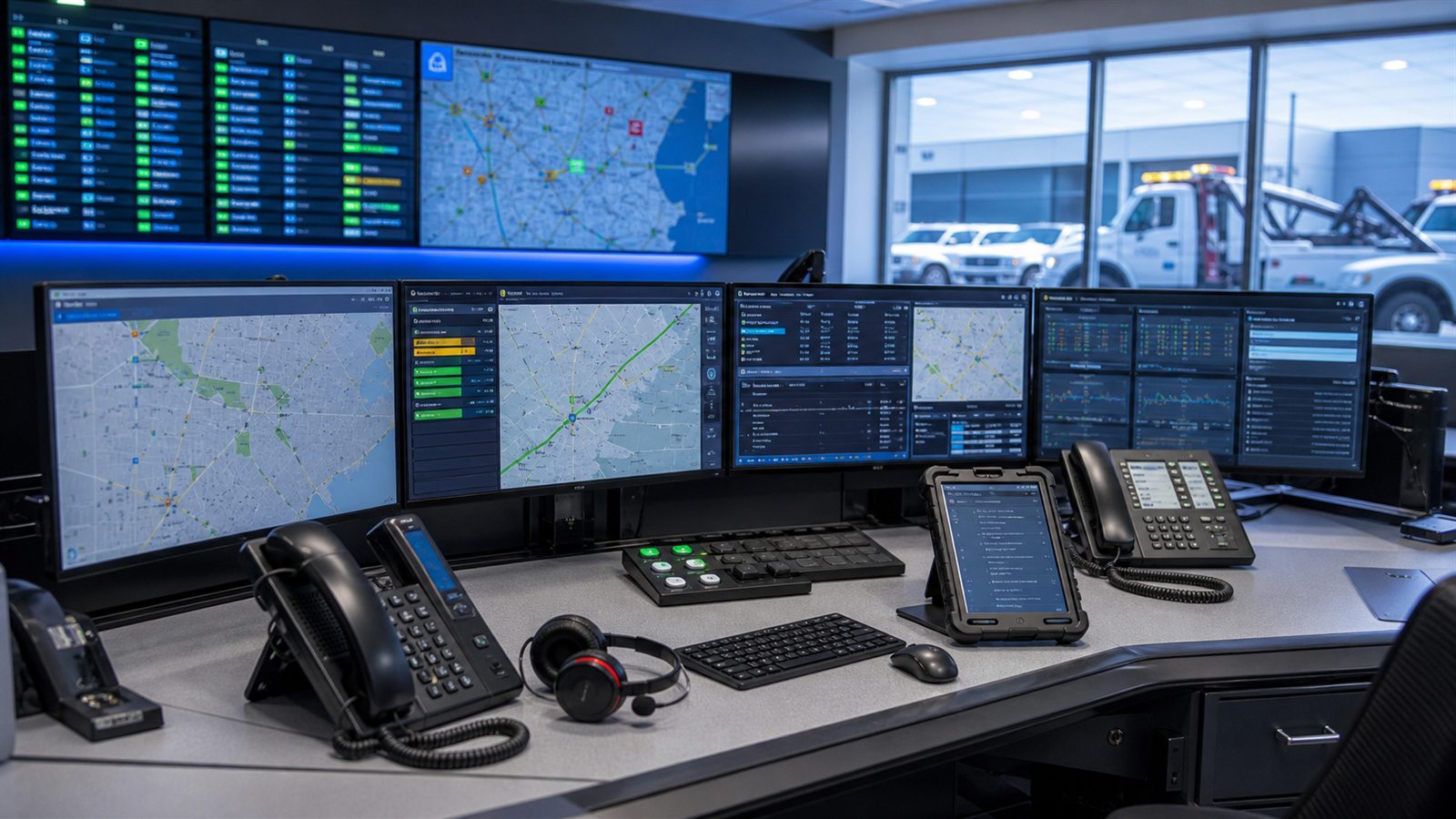
Transportation

IT support for transportation operations that run around the clock.

Taxi, towing, and dispatch-driven transportation businesses depend on dispatch systems, mobile connectivity, communications, payment processing, and fleet tools that all need to stay connected 24/7. When any link in that chain breaks, revenue loss starts immediately.

  • iCabbi, TaxiCharger, and TaxiCaller dispatch support
  • Mitchell 1, Tracker Management, and fleet systems
  • Mobile device management and field connectivity
  • 24/7 dispatch continuity and communications support

Dispatch operations do not get to go offline. The IT support behind them should reflect that.

Transportation companies depend on a chain of connected systems: dispatch platforms assign jobs, mobile devices keep drivers connected, communications handle customers and coordination, and payment systems close transactions. Every link in that chain needs to work, and the operation does not pause while IT catches up.

Most IT providers treat transportation like any other small business. Treo understands that dispatch-driven operations have different urgency, different uptime expectations, and different consequences when systems fail. Support needs to reflect the 24/7 reality, not office hours.

What usually creates the pressure

The trigger is usually not one failure. It is the accumulation of fragility across connected systems.

  • Dispatch system instability disrupts job flow and customer response
  • Driver mobile devices and apps lose connectivity or fail in the field
  • VoIP, call routing, or radio systems create communication gaps
  • Payment processing or transaction systems interrupt revenue collection

What Treo handles in transportation environments

The scope depends on the operation, but this is the practical work that keeps dispatch moving and the systems behind it reliable.

Dispatch system support and continuity

Dispatch is the operational core. When it goes down, jobs stop flowing, drivers sit idle, and customers go elsewhere. Treo supports the platforms and infrastructure that keep dispatch available around the clock.

  • iCabbi and TaxiCharger dispatch platform support
  • TaxiCaller, TowBook, and TOPS system support
  • Dispatch infrastructure reliability and failover
  • Server, database, and application-level support

Mobile device and fleet connectivity

Drivers depend on phones, tablets, GPS, and mobile apps to receive jobs, update status, navigate, and complete transactions. Field connectivity is not optional in this industry.

  • Mobile device management and provisioning
  • Driver app support and configuration
  • GPS and vehicle tracking system support
  • Field connectivity troubleshooting

Fleet management and shop systems

Fleet maintenance, vehicle tracking, and shop management systems need to stay current and connected to keep vehicles on the road and maintenance on schedule.

  • Mitchell 1 and Tracker Management support
  • Fleet maintenance and scheduling systems
  • Vehicle tracking and reporting integration
  • Shop system administration and connectivity

Communications and call handling

Phone systems, VoIP, call routing, and radio communications are part of the operational chain, not peripheral tools. When communications break, dispatch and customer service both suffer.

  • VoIP and phone system support
  • Call routing and queue management
  • Radio and dispatch communication systems
  • Communications redundancy and failover

Payment and transaction systems

Card processing, in-vehicle payment terminals, and invoicing systems need to work reliably for every transaction. Payment failures cost revenue and erode customer trust.

  • Card processing and terminal support
  • In-vehicle payment system connectivity
  • Invoicing and transaction system integration
  • Payment system troubleshooting and reliability

Backup, failover, and continuity planning

A 24/7 operation cannot afford to discover its failover plan does not work during an outage. Continuity needs to be planned, tested, and maintained as part of ongoing support.

  • Dispatch and communications failover planning
  • Backup verification and recovery testing
  • Redundancy for critical operational systems
  • Continuity planning for extended outage scenarios

How transportation IT support works in practice

The value is not just a list of systems. It is how the support accounts for the urgency and uptime demands of a 24/7 operation.

Map

Understand the full chain of systems the operation depends on.

Dispatch, mobile, communications, payments, fleet tools, and the infrastructure underneath them. The first step is a clear picture of every link in the chain and where the weakest points are.

Stabilize

Reduce the fragility that turns small problems into operational disruptions.

Single points of failure, unreliable connectivity, and systems running without monitoring or failover get addressed first. The goal is a more resilient foundation before adding anything new.

Connect

Make sure dispatch, drivers, communications, and payments work together cleanly.

Systems that should be talking to each other often are not. Integration work reduces the manual handoffs and disconnected processes that create friction in a fast-moving operation.

Monitor

Watch the systems that matter most so problems surface before they disrupt.

In a 24/7 operation, finding out about a dispatch failure from an angry customer is too late. Monitoring critical systems means issues get caught and addressed before they cascade.

Support

Provide ongoing support that matches the urgency of the operation.

Transportation operations do not run on office hours. Support needs to reflect the reality that dispatch downtime at 2 AM costs just as much as dispatch downtime at 2 PM.

Common questions about transportation IT support

These are the questions we hear most often from transportation companies evaluating whether they need a different kind of IT support.

Do you support iCabbi?

Yes. Treo has direct experience supporting iCabbi in dispatch-driven transportation environments, including the infrastructure, connectivity, and surrounding systems that keep the platform running reliably.

Can you support a 24/7 operation?

Yes. Treo understands that dispatch-driven operations do not pause for business hours. Support, monitoring, and continuity planning are structured around the reality that downtime at any hour has the same business impact.

What if we have multiple locations or a mixed fleet?

That is common. Many transportation operations span multiple dispatch centers, vehicle types, or service areas. Treo helps standardize and support the technology across locations so the operation works as one system.

How does this connect to managed IT?

Many transportation companies also need broader IT support for office staff, Microsoft 365, security, and general infrastructure. The dispatch-specific work often sits alongside a managed IT relationship where Treo handles both the operational systems and the surrounding environment.

Need clearer support for the systems behind your dispatch operation?

A conversation can help clarify where dispatch continuity, communications, payments, or field connectivity may be creating risk, and whether Treo is the right fit for your operation.

Talk to an Expert